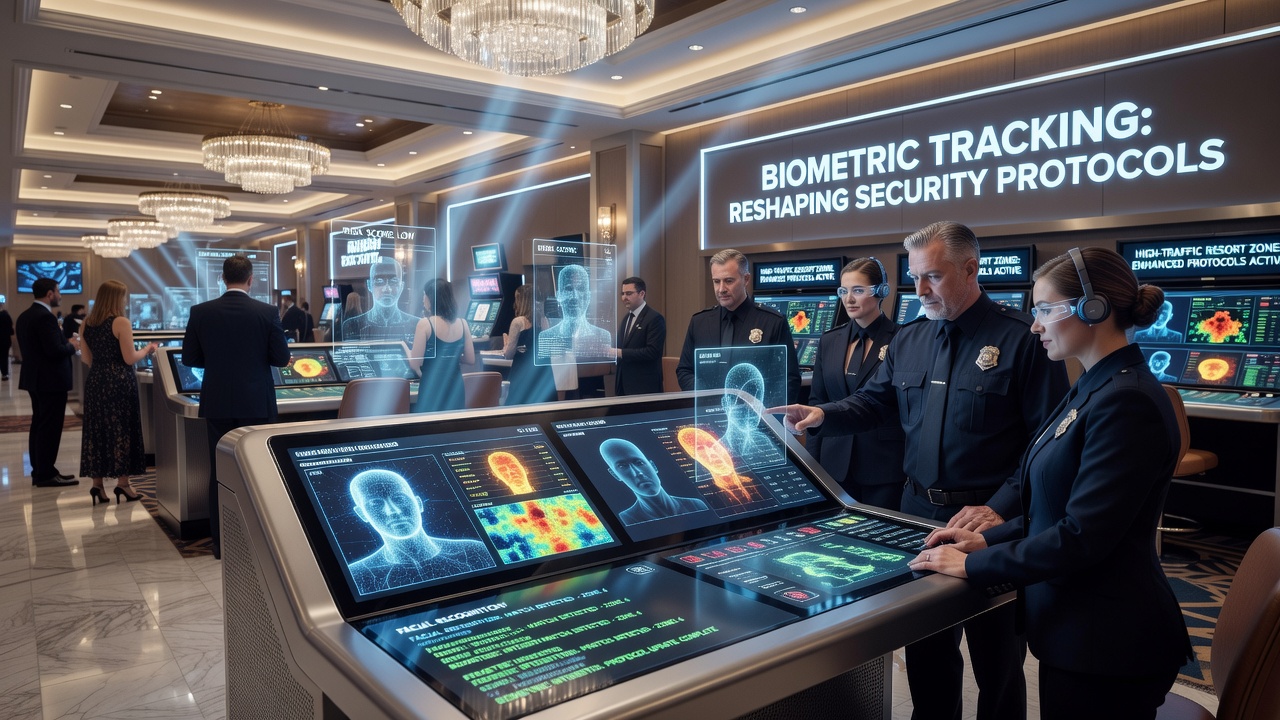
Biometric Tracking Integrations Reshaping Security Protocols Across Las Vegas Gaming Tables and High-Traffic Resort Zones
Las Vegas resorts have expanded biometric tracking systems that combine facial recognition, palm vein patterns, and gait analysis to verify identities at gaming tables and throughout high-traffic areas such as entrances, walkways, and entertainment zones. These integrations connect directly to central databases that cross-reference visitor profiles with watch lists and transaction histories, allowing security teams to flag potential issues before they escalate. Data from the Nevada Gaming Control Board shows that multiple properties began rolling out enhanced facial recognition at table games in 2024, with full deployment across several Strip resorts expected by July 2026. Operators now route biometric feeds through secure on-site servers that process matches in under two seconds, cutting down on manual ID checks that once slowed table play. At blackjack and poker tables, dealers trigger a quick scan when players request high-limit markers or large chip exchanges, while overhead cameras maintain continuous monitoring of movement patterns. High-traffic resort zones apply the same technology at escalator banks and pool entrances, where systems count occupancy levels and detect loitering behaviors that previously required additional staff presence.Table Game Applications
Biometric checkpoints at gaming tables link player accounts to loyalty programs and credit lines without requiring physical cards, since palm scanners confirm identity during buy-ins. One Strip property reported that this approach reduced disputed transactions by aligning every wager with verified profiles in real time. The system also flags card counters or known advantage players by matching live scans against historical data sets maintained by casino security networks.
Resorts coordinate these table integrations with broader floor-wide networks that share alerts across properties owned by the same parent company, so a flagged individual at one location triggers notifications at others within minutes. Observers note that the shift toward biometric verification has allowed casinos to maintain higher table minimums during peak hours while keeping lines moving smoothly.
High-Traffic Zone Monitoring
Outside the gaming areas, biometric cameras cover resort lobbies, convention hallways, and outdoor promenades where visitor volume peaks between 8 p.m. and midnight. These zones use multi-angle facial mapping combined with infrared sensors that function despite the bright neon lighting common on the Strip. When systems detect an individual matching a security alert, they route the information to mobile devices carried by floor supervisors rather than broadcasting over public radios.

Resort operators have paired the technology with access control gates at employee-only corridors and high-limit salons, where vein-pattern readers replace traditional keycards for staff and approved guests. This setup limits unauthorized entry while generating audit logs that meet regulatory requirements for both Nevada and interstate gaming compacts.
Regulatory and Technical Framework
The Nevada Gaming Control Board requires that all biometric data collected at licensed properties remain encrypted and stored for a minimum of 90 days, with access restricted to designated security personnel. Properties must also submit quarterly reports detailing match accuracy rates and false positive incidents. Figures released by the board indicate that average false match rates across participating resorts dropped below 0.3 percent after software updates deployed in early 2025.
Industry groups such as the American Gaming Association have published guidelines that encourage standardized data formats so different resort groups can exchange watch-list information without exposing full biometric templates. Meanwhile, a research paper from the University of Nevada, Las Vegas Center for Gaming Research outlines how thermal imaging combined with facial recognition improves performance in the extreme temperature swings found between air-conditioned interiors and outdoor plazas.
Operational Impacts
Security teams now allocate fewer personnel to routine ID verification and more to active response, since automated alerts handle initial screening. One major resort group documented a 22 percent reduction in incident response times after linking biometric feeds to its central command center. The same networks also support crowd-flow modeling that predicts congestion points near stage entrances or sports book areas during major events.
Maintenance schedules for these systems include monthly calibration checks and annual third-party audits to confirm compliance with both state gaming statutes and federal data-protection expectations. Resorts coordinate with local law enforcement through secure portals that allow biometric queries during active investigations while preserving chain-of-custody records.
Conclusion
Biometric tracking continues to evolve as Las Vegas properties refine algorithms and expand coverage to additional resort zones. By July 2026, updated state guidelines are expected to require real-time reporting of biometric match statistics, further standardizing how operators manage security data across gaming tables and public spaces. These developments build on existing infrastructure that already connects surveillance feeds, loyalty databases, and regulatory oversight into a single operational framework.