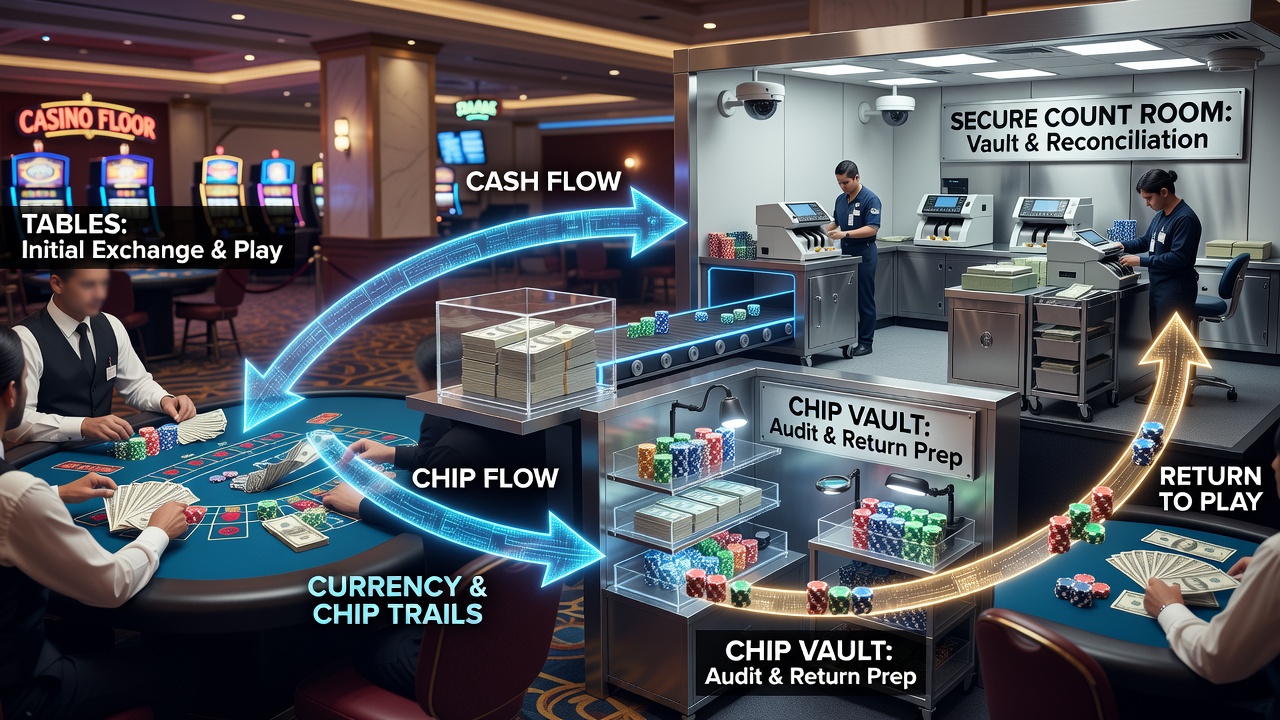
Following Currency Trails: How Cash and Chips Navigate Las Vegas Casino Floors From Tables to Secure Count Rooms and Return to Play
Las Vegas casino floors operate under tightly regulated systems where cash and chips move from gaming tables through secure collection points and into count rooms before re-entering circulation, with every step documented according to standards set by the Nevada Gaming Control Board.
Dealers at blackjack, roulette, and craps tables collect bets in the form of chips or currency and place them into locked drop boxes attached beneath the table surface, while pit supervisors monitor the process and record transactions on shift reports that track totals by denomination and game type.
Security personnel conduct regular sweeps of the floor to collect full drop boxes, replacing them with empty ones under continuous camera surveillance that captures the entire transfer from table to cart, and these carts travel along predetermined routes to reach the count room without deviation.
Collection and Transport Protocols
Each drop box carries a unique identifier that links it to a specific table and time period, allowing auditors to reconcile the contents against recorded play activity later, while armed guards and electronic tracking systems accompany the movement to prevent any unauthorized access during the journey across the casino floor.
Count rooms themselves remain off-limits to most casino staff, with access restricted to authorized personnel who enter through dual-control procedures that require simultaneous verification from multiple employees, and the rooms feature reinforced walls, independent ventilation, and overlapping video coverage from multiple angles.
Counting and Reconciliation Processes
Inside the count room, teams or automated systems sort and count the cash and chips, with currency fed through high-speed machines that verify denominations and detect counterfeits while chips undergo manual inspection for authenticity and wear, after which all totals are logged into computerized systems that cross-reference against table reports.

Data from these counts feeds directly into casino accounting systems that update daily financial records, and discrepancies trigger immediate investigations involving both internal auditors and external regulators who review surveillance footage and employee logs to identify the source of any variance.
Chip Redistribution and Cash Handling
Verified chips return to the cage and table supply areas in sealed containers that maintain chain-of-custody documentation, whereas cash proceeds move to secure vaults or bank deposit procedures that follow schedules aligned with operational needs and regulatory reporting requirements.
Casino operators coordinate with armored transport services for large cash movements off-site, yet smaller volumes of currency often remain on property to refill chip redemption needs and maintain adequate float for ongoing table play, with all movements logged in real time through integrated management software.
Observers note that electronic systems now track individual high-value chips through RFID tags embedded during manufacturing, which allows floor supervisors to monitor chip distribution patterns across multiple tables and detect unusual concentrations that might indicate irregularities before they reach the count room.
Regulatory Oversight and Technological Integration
The American Gaming Association reports that modern casinos integrate these physical trails with digital oversight platforms that combine point-of-sale data from table games with video analytics and access control logs, creating comprehensive audit trails that regulators can review remotely or on demand.
Staff training emphasizes adherence to these procedures, with regular drills that simulate various scenarios involving drop box collection, count room entry, and emergency response, while background checks and ongoing monitoring apply to anyone with access to currency movement areas.
Research from the University of Nevada, Las Vegas Center for Gaming Research indicates that such layered controls have reduced discrepancies in currency handling across major properties, with reconciliation rates improving as facilities adopt more automated counting and verification technologies.
Conclusion
Currency and chips complete their cycles from tables back to play through a sequence of documented handoffs, secure transports, and verified counts that maintain operational integrity across Las Vegas casino floors, supported by regulatory frameworks and technological tools that record each transition in detail.