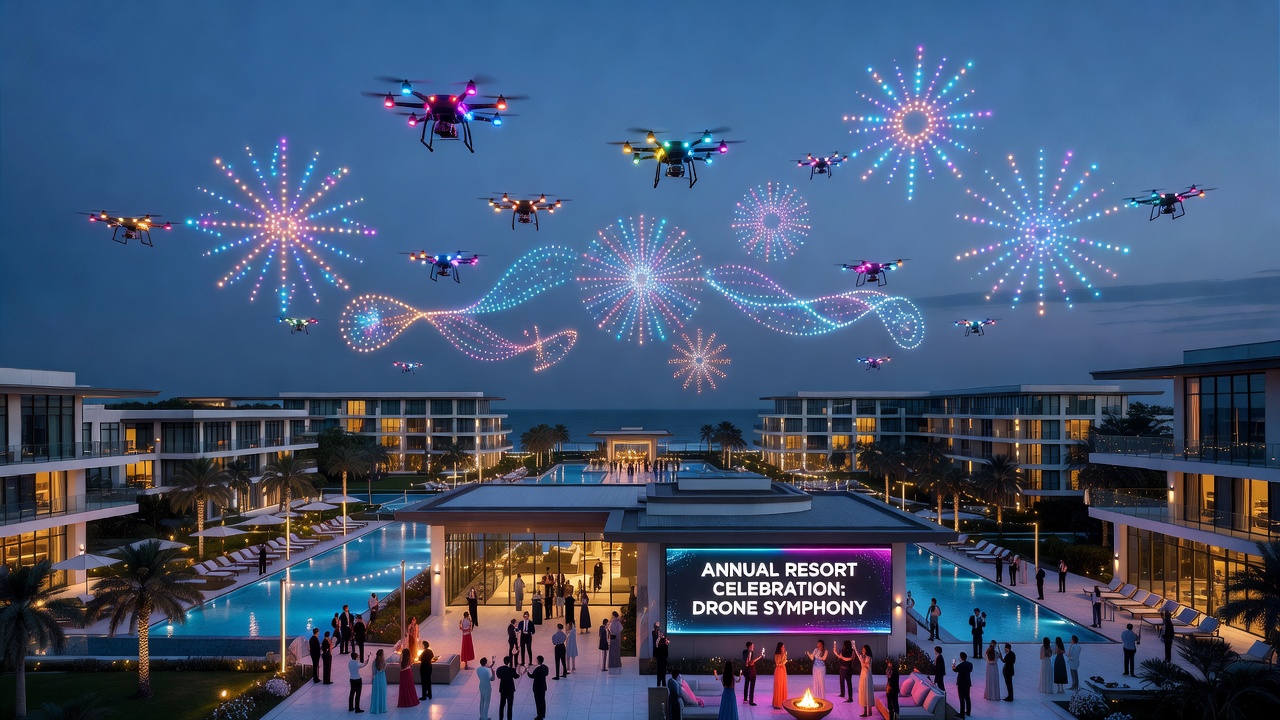
Orchestrating Synchronized Drone Formations Above Resort Clusters During Major Annual Celebrations
Resort clusters along the Las Vegas Strip coordinate large-scale drone displays that light up the sky during major annual celebrations, and these events draw thousands of spectators each year. Operators deploy fleets of unmanned aerial vehicles that execute precise formations synchronized with music, lights, and pyrotechnics, while the shows rely on GPS-guided systems that maintain spacing measured in centimeters. Data from the Federal Aviation Administration shows that approved drone operations in urban corridors have increased steadily since 2020, with Las Vegas hosting multiple events that feature over 500 units flying simultaneously during peak holiday periods.
Technical Systems Behind Formation Control
Each drone carries real-time kinematic GPS modules along with inertial measurement units that correct drift in three dimensions, and ground control software adjusts individual flight paths every 50 milliseconds to prevent collisions. Swarming algorithms developed by research teams at institutions such as the University of Nevada, Las Vegas allow the fleet to shift between shapes like stars, hearts, or resort logos without manual input from pilots. Battery packs rated for 25-minute flights power the LED arrays that create visible color changes, while redundant communication links on 2.4 GHz and 5.8 GHz bands keep the swarm connected even when radio interference spikes near high-rise buildings.
Regulatory Requirements and Airspace Management
The Federal Aviation Administration requires operators to obtain waivers for nighttime flights and operations over people, and these approvals hinge on demonstrated geofencing that keeps drones within designated corridors above resort properties. Federal Aviation Administration guidelines specify minimum distances from airports and mandate remote identification broadcasting so authorities can trace any unit that deviates from its approved route. Transport Canada has published parallel standards for cross-border drone manufacturers, which helps suppliers meet both U.S. and Canadian certification benchmarks when components cross the border.
Event planners submit flight plans 30 days in advance that detail launch zones on resort rooftops, recovery areas in parking structures, and emergency landing protocols that account for sudden wind gusts common in desert environments. Observers note that coordination meetings between the FAA, local law enforcement, and resort security teams occur weekly in the month leading up to major shows, and these sessions review weather forecasts plus spectrum availability for command signals.
Integration with Resort Celebration Schedules
During the July 4th weekend in 2026, multiple properties along the Strip have filed notices for synchronized displays that will run from 9:15 p.m. until 9:45 p.m. on both July 3 and July 4, with each performance timed to coincide with live music stages set up in adjacent parking lots. Resorts share a common timecode feed that aligns drone movements with fountain jets at hotel entrances and exterior lighting sequences, creating a unified visual experience visible from multiple vantage points. One study released by the Drone Industry Association in 2024 found that coordinated multi-property shows generate measurable increases in foot traffic to participating venues, with pedestrian counts rising 18 percent within two hours of each performance.
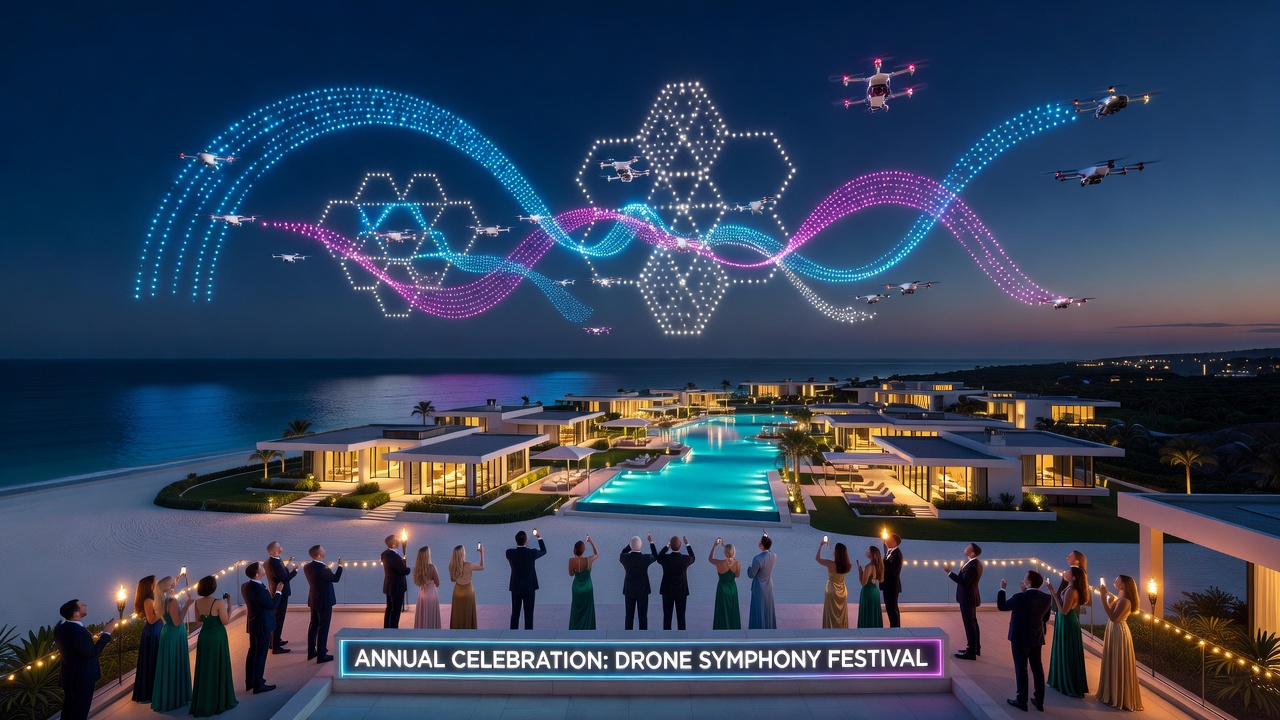
Operators rotate drone fleets between properties to reduce wear on individual units, and maintenance crews perform pre-flight inspections that check propeller balance, motor temperature, and firmware versions. Spare batteries sit in climate-controlled trailers parked on service roads, allowing quick swaps between shows when temperatures exceed 100 degrees Fahrenheit. Data logs captured during each event feed into post-flight analysis that identifies any units requiring component replacement before the next scheduled display.
Safety Protocols and Emergency Procedures
Each formation includes designated safety drones equipped with parachutes and audible alarms that activate if primary navigation fails, and these units fly at the perimeter of the swarm to create a buffer zone. Ground teams monitor live telemetry feeds that display battery voltage, GPS lock status, and wind speed at altitude, while spotters positioned on rooftops maintain visual contact and carry handheld radios for immediate communication with the flight director. The European Union Aviation Safety Agency has issued guidance on similar swarm operations that emphasizes layered redundancy, and several Las Vegas operators have incorporated those recommendations into their standard operating procedures even though the rules apply outside U.S. jurisdiction.
Wind sensors placed at multiple heights around resort towers trigger automatic landing sequences if gusts exceed 25 miles per hour, and operators practice these scenarios during daytime rehearsals that use non-lighted training drones. Records maintained by the National Transportation Safety Board indicate that properly permitted drone events in controlled airspace have recorded zero collisions with manned aircraft through 2025, though minor incidents involving single units landing outside recovery zones still occur during high-wind periods.
Conclusion
Resort clusters continue to expand the scale of synchronized drone formations as technology improves and regulatory pathways become more defined, with July 2026 events expected to feature larger fleets and tighter integration with existing entertainment infrastructure. The combination of precise positioning systems, coordinated scheduling, and layered safety measures supports reliable operations that draw consistent attendance during major annual celebrations.