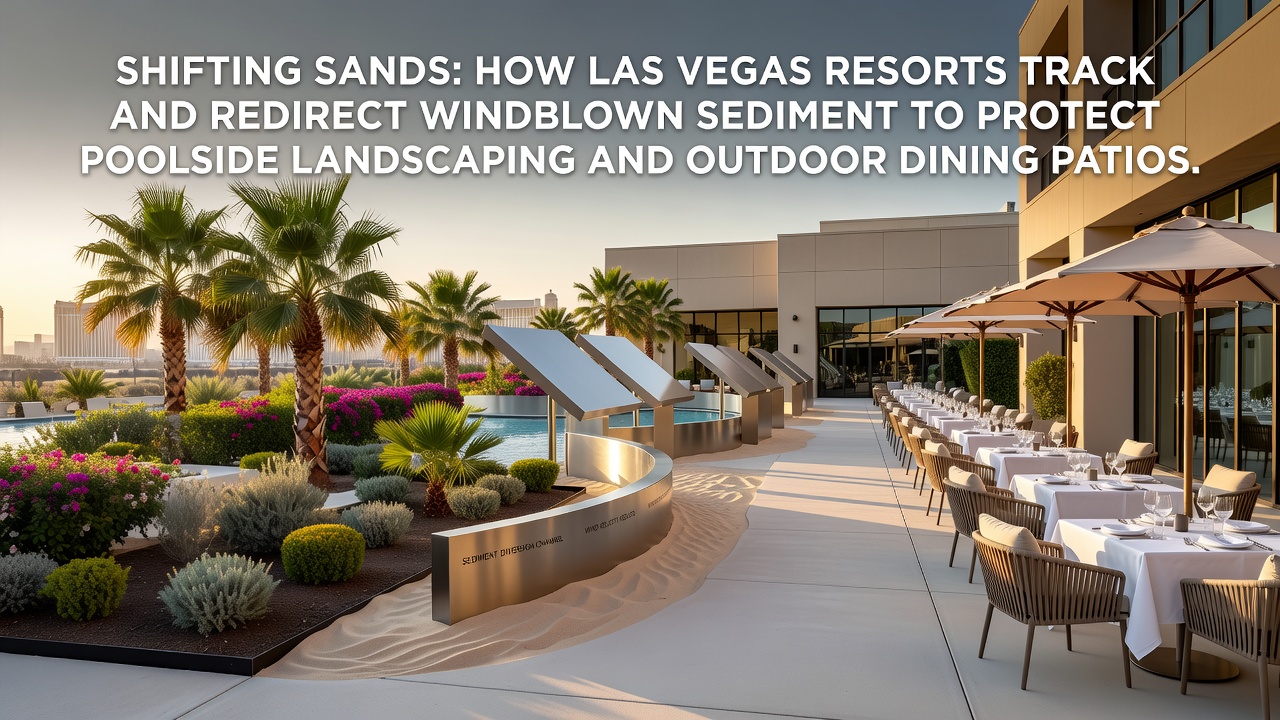
Shifting Sands: How Las Vegas Resorts Track and Redirect Windblown Sediment to Protect Poolside Landscaping and Outdoor Dining Patios
Las Vegas resorts face persistent challenges from windblown sediment that sweeps across the Mojave Desert and settles on pool decks along with outdoor dining areas. Resorts deploy monitoring systems that record wind speed along with particle movement while operators adjust barriers before sediment accumulates in significant volumes. Data from weather stations integrated with resort networks shows peak sediment transport occurs during afternoon gusts that exceed 15 miles per hour and researchers at the Desert Research Institute have documented how these patterns intensify during transitional seasons.
Tracking Sediment Movement Through Integrated Systems
Resorts install arrays of anemometers and optical particle counters around property perimeters to capture real-time information on sediment flow. These devices feed information into central dashboards that alert maintenance teams when concentrations rise above established thresholds and operators cross-reference readings with regional forecasts issued by the National Weather Service. One study conducted across multiple Strip properties revealed that coordinated sensor networks reduced unexpected sediment deposits by 37 percent compared with properties relying solely on visual inspections.
Technicians also employ drone surveys every two weeks to map accumulation zones near landscaping features. The drones capture high-resolution imagery that highlights areas where wind funnels between buildings create deposition hotspots and grounds crews use this information to position temporary deflectors before the next wind event arrives. Such proactive steps keep sediment away from filtration intakes at pool facilities where even small amounts can increase maintenance demands.
Redirecting Windblown Material With Engineered Barriers
Physical interventions include porous windbreaks constructed from metal mesh and native vegetation that slow airflow while allowing some passage to prevent turbulence on the leeward side. Resorts position these structures along prevailing wind corridors identified through long-term meteorological records and horticultural teams select drought-tolerant species whose root systems stabilize surrounding soil. According to Bureau of Land Management reports on arid land management practices in the southwestern United States, properly designed windbreaks can cut sediment transport rates by up to 60 percent when aligned with local topography.
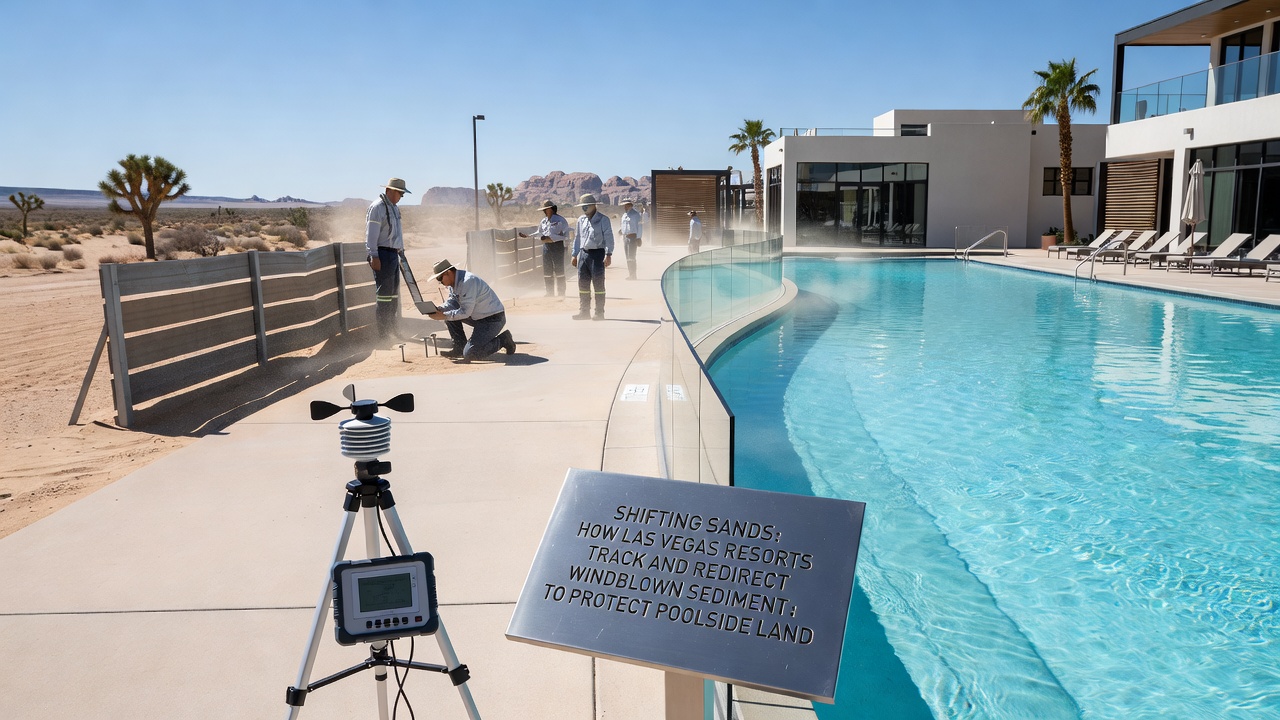
Additional redirection methods involve subsurface drainage channels fitted with grated covers that guide loose material toward collection points rather than allowing it to spread across patios. Maintenance crews vacuum these channels on scheduled intervals while sensors embedded in the system notify teams when flow rates indicate blockages and this combination of passive and active measures maintains clear surfaces for guests throughout the day. Observers note that resorts along the Strip coordinate barrier adjustments with neighboring properties to avoid simply shifting sediment from one location to another.
Protecting Poolside Landscaping and Dining Areas
Poolside plantings receive particular attention because sediment can smother root zones and alter soil chemistry over repeated exposure. Groundskeepers apply targeted irrigation schedules that keep surface moisture levels sufficient to bind particles without creating excess runoff and they install low-profile edging that channels wind-driven material into designated collection troughs. Data collected from multiple properties indicates these combined techniques extend the lifespan of landscaping installations by an average of 18 months before replacement becomes necessary.
Outdoor dining patios present different requirements because furniture and table settings must remain clean between seatings. Resorts deploy retractable fabric screens during forecasted high-wind periods and staff position portable deflectors at table perimeters to create localized calm zones. Industry reports from the American Society of Landscape Architects highlight how such adaptable features integrate with overall site design without obstructing guest views of surrounding architecture.
Seasonal Patterns and Operational Adjustments
Wind and sediment activity follows predictable seasonal cycles that allow resorts to adjust staffing and equipment deployment accordingly. Spring months bring stronger frontal systems while fall sees increased dust from distant agricultural activity and operators review historical datasets each quarter to refine response protocols. Although September 2026 brought above-average wind events tied to regional pressure patterns, properties that had pre-positioned additional barriers experienced minimal disruption to pool and patio operations.
Collaboration with regional agencies supplies resorts with broader context on desert conditions that influence on-site decisions. Teams incorporate satellite imagery from federal sources to anticipate larger dust plumes and they share anonymized sensor data with academic partners studying urban desert interactions. These partnerships yield improved models that help properties anticipate conditions days ahead rather than reacting after sediment arrives.
Conclusion
Las Vegas resorts maintain extensive programs that combine continuous monitoring, strategic barrier placement, and coordinated maintenance to manage windblown sediment around poolside landscaping and outdoor dining patios. These efforts rely on data from multiple sources along with physical infrastructure designed specifically for arid environments and ongoing refinements keep operations running smoothly even when desert winds intensify.